0
Registered users
Active profiles with at least one login in the past 90 days. Up from 47,000 at the start of the year.
Four working .onion mirrors, cross-checked against PGP-signed announcements on Dread. Nothing else. No ads, no affiliate redirects, no hidden trackers. Just the address, the copy button, and a quick reminder to paste it into Tor Browser.
Loading...
We get the same nine questions from Bing traffic every week. Here they are, answered once, without filler. For a deeper walkthrough jump to the entry guide.
Nexus is a darknet marketplace launched in November 2023. It accepts Bitcoin, Monero, and Litecoin, runs a PGP-first authentication system, and has grown to 52,342 registered users and 1,394 approved vendors by April 2026. The platform is known for its distinctive cyberpunk interface and 15-language support — a rare combination on Tor, where most markets still ship with a plain bootstrap theme. If you're new, start with the inside Nexus overview.
Download Tor Browser from torproject.org. Set the security slider to Safest. Copy one of the verified links from the links section — do not type the address by hand. Paste into the Tor Browser address bar and hit enter. Nexus loads without JavaScript, so the Safest setting will not break anything. One wrong character costs you an account, so always copy.
Four. All four addresses on this page route to the same backend — same vendor list, same wallet balance, same message inbox. Mirrors exist to balance load and absorb DDoS pressure. If one responds slowly, try the next. We rotate the primary label whenever Dread announcements confirm a change. Bookmark this page, not individual mirrors.
Three: Bitcoin (BTC), Monero (XMR), and Litecoin (LTC). Monero is the default recommendation for privacy — its ring signatures obscure sender, receiver, and amount. Get XMR from the official Monero project. Bitcoin works but requires mixing before deposit. Litecoin sits in the middle: cheaper fees than BTC, weaker privacy than XMR. Most experienced users pick XMR; Bitcoin is for those who only have exchange holdings.
Standard 2-of-3 multisig. Three keys: buyer, vendor, Nexus. Any two keys unlock funds. If buyer and vendor agree, Nexus is never involved. If there's a dispute, Nexus arbitrates. If Nexus became unavailable tomorrow, buyer and vendor could still finalize without them. It's the single biggest structural difference between a market worth trusting and a centralized escrow waiting to run. Keys are generated client-side during checkout.
Recommended, not strictly required for basic browsing. But you need it to order anything sensitive. Generate a keypair with GnuPG or KeePassXC's OpenPGP add-in before registration. Upload the public key to your profile. Nexus supports passwordless PGP login: the platform sends you an encrypted challenge, you decrypt with your private key, that's your login. No password to phish, no password to leak in a breach.
The interface is fully responsive and renders well on mobile Tor Browser. But we do not recommend it. Mobile devices leak identifiers the desktop does not: IMEI, SIM serial, baseband fingerprints. Mobile networks are also more heavily monitored than residential wired connections. If you use mobile at all, use it only for browsing — never for login, never for wallet operations. The Tails OS boot stick from a laptop remains the gold standard.
Phishing clones copy the Nexus interface pixel-perfect. The only reliable check is the .onion address, character by character. That's why we publish all four on this page and link them with a Copy button — so you never retype. Also verify Dread PGP signatures before trusting any new address that appears elsewhere. Short-URL services, YouTube video descriptions, random forum threads: all phishing vectors. The Electronic Frontier Foundation's threat model primer is a useful refresher.
Jurisdiction-dependent. Browsing a darknet market is not itself a crime in most Western jurisdictions. Transacting in prohibited goods is. This site publishes link information for research, journalism, and personal opsec review — standard fare already covered by Privacy Guides. We're not your lawyer. Know your local laws. Use Mullvad or Whonix for additional isolation if your threat model demands it.
New to Tor? Start at step one. Already running Tails? Skim — the PGP and 2FA sections matter most. Every step assumes you want Nexus open in under fifteen minutes without leaking your identity along the way.
Visit torproject.org. Download the version for your OS. Verify the signature if you can — the Tor Project publishes GPG signatures on every release, and GnuPG takes thirty seconds to check. Do not install Tor Browser from an app store, a torrent, or a third-party mirror. Those are compromised more often than they are not.
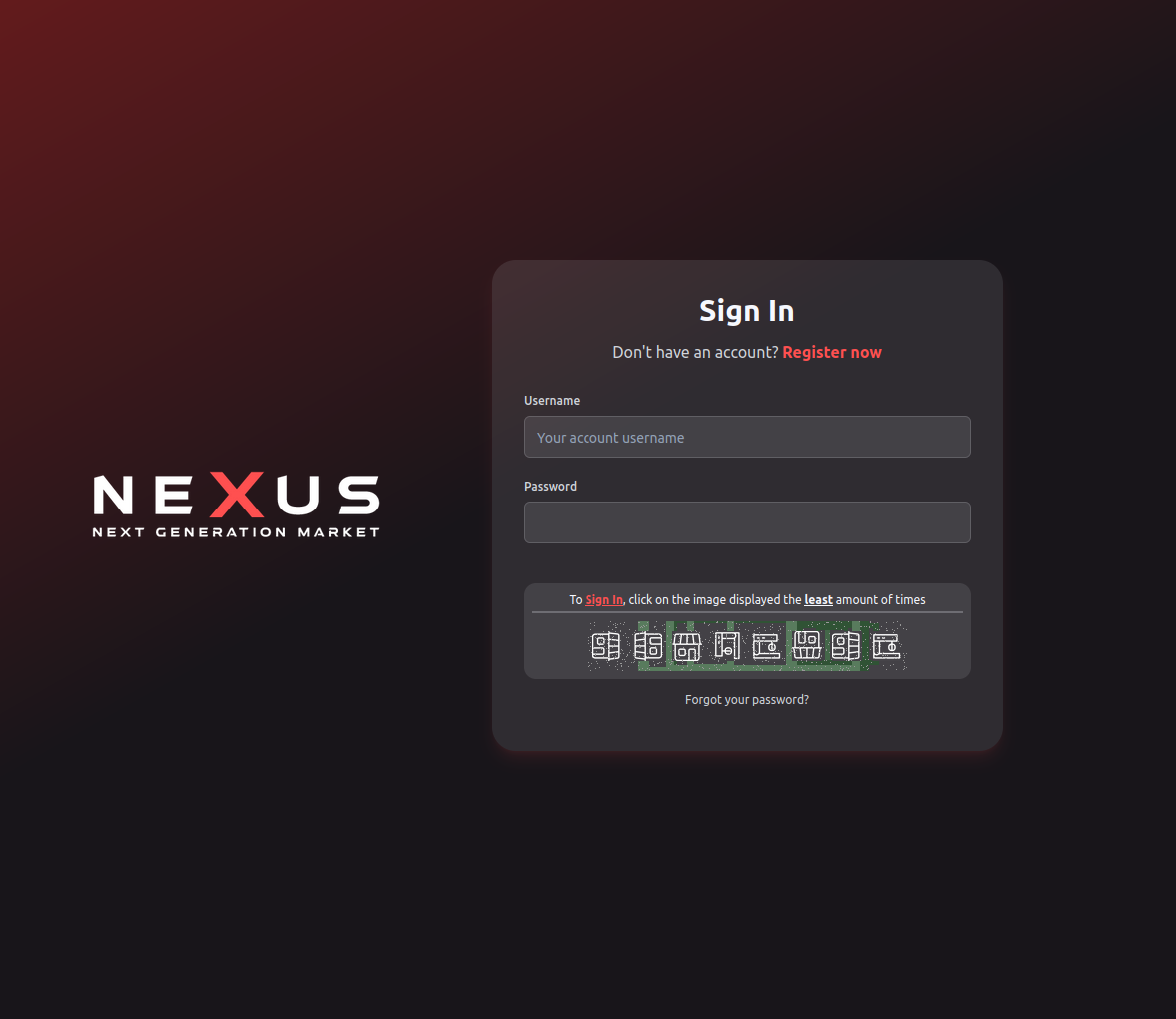
Click the shield icon in the Tor Browser toolbar. Select Safest. This disables JavaScript globally, kills most font loading, and blocks several media formats that have historically been used for deanonymization. Nexus renders correctly in Safest mode — it was built with this constraint in mind. Any market page that breaks under Safest is a page you should not be submitting credentials to.
Scroll to the links section on this page. Use the Copy button next to one of the four verified addresses. Ctrl-V into the Tor Browser URL bar. Never retype. An .onion address is a base32 hash of the service's public key — a single wrong character resolves to a different service, which is how phishing operators farm credentials and redirect deposits.
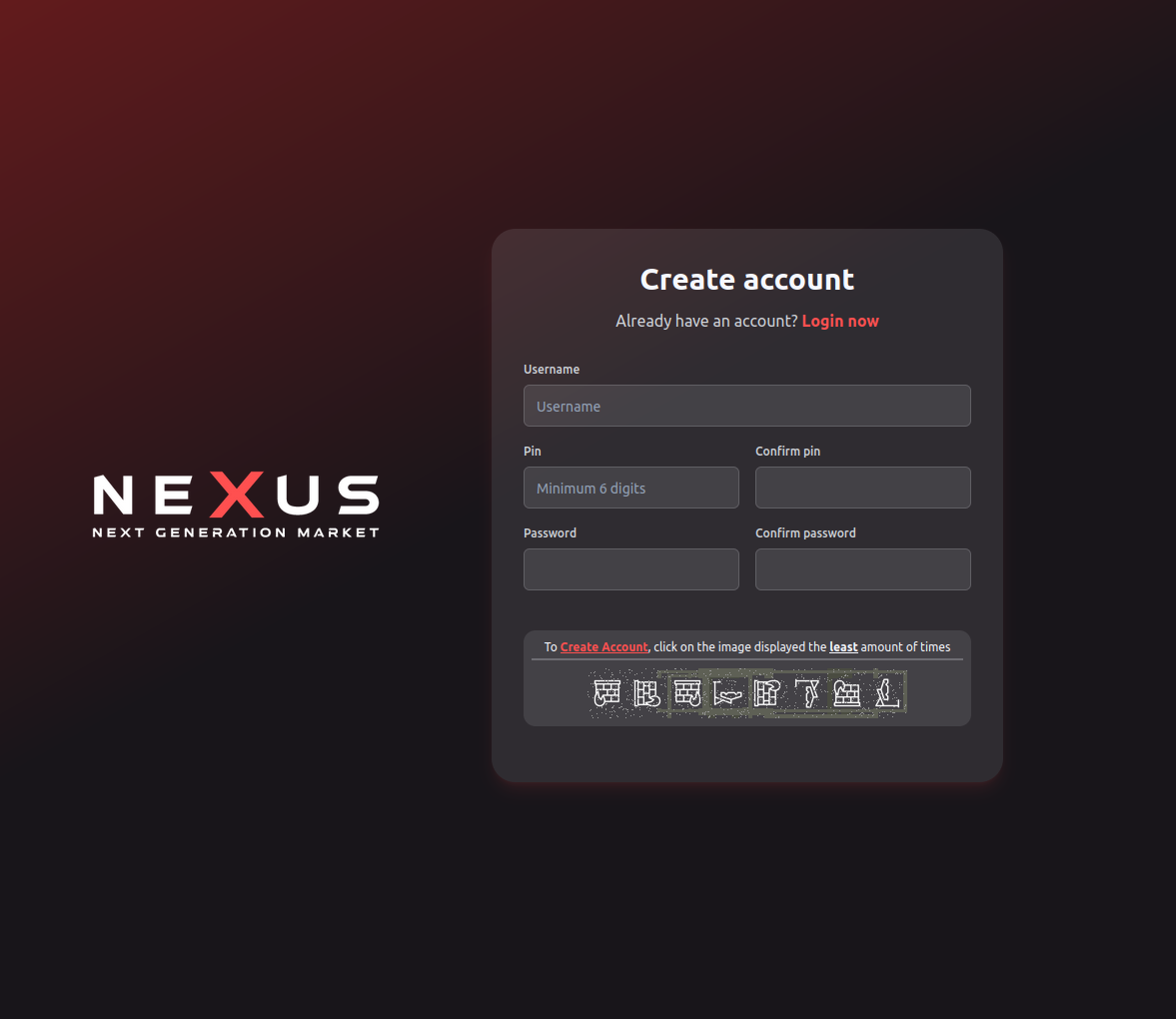
Before you register, generate a fresh PGP keypair dedicated to Nexus. Do it without internet access — boot Tails from a USB stick for the ceremony, or run Qubes if you're already running it. Use a strong passphrase. Export the public key only; the private key never leaves an encrypted volume. A compromised PGP key is a compromised identity.
Sign up using a new pseudonym unrelated to anything you've used elsewhere. Nexus requires username + password, then offers PGP and 2FA in account settings. Upload your public key — this enables PGP login (the platform sends you an encrypted challenge, you decrypt to prove identity). Add TOTP 2FA using KeePassXC or a dedicated authenticator app. Do both. Password alone is not a security boundary in 2026.
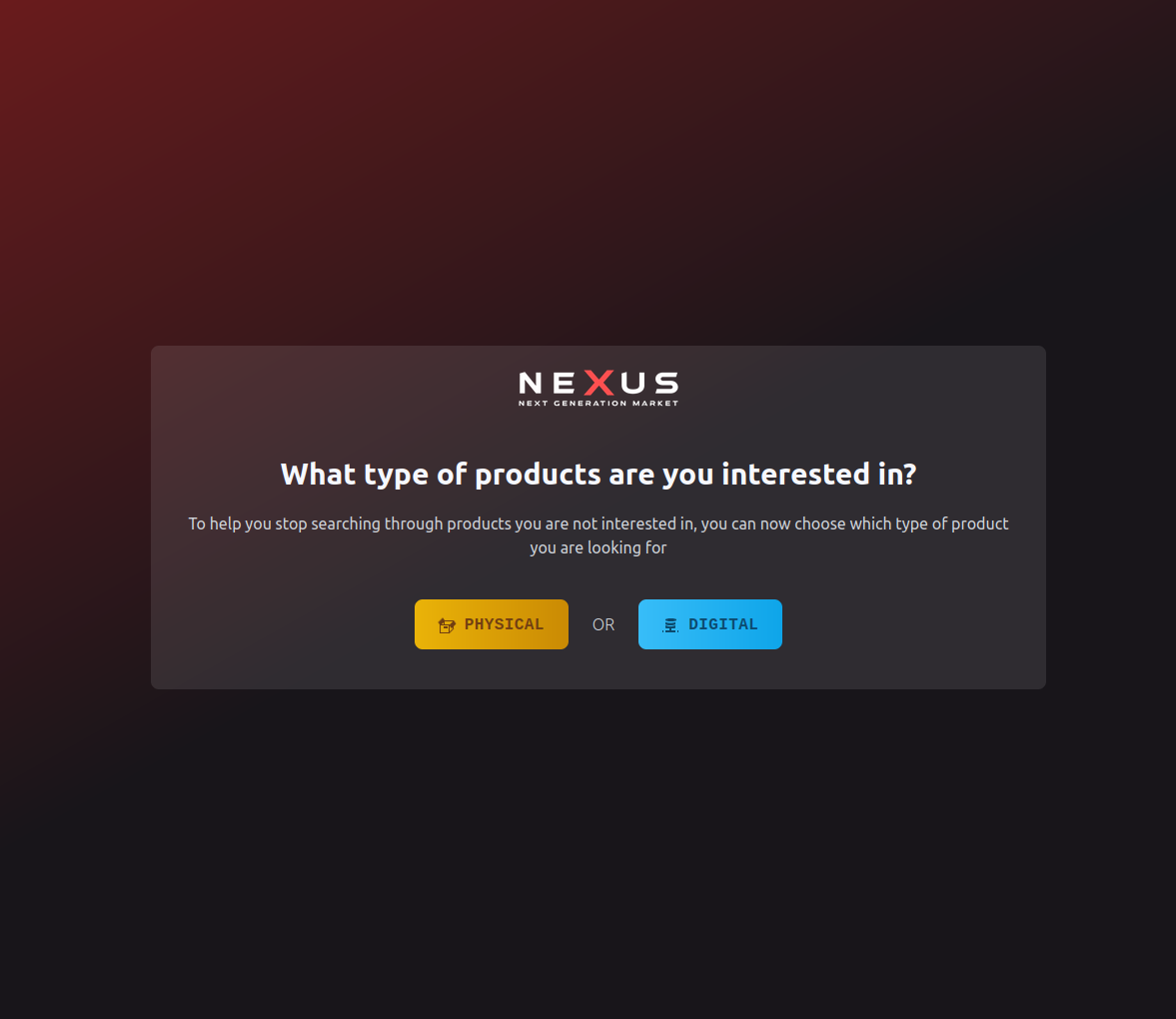
Buy XMR from an exchange, or use an atomic swap if you already hold BTC. Withdraw to a local Monero wallet — the official GUI wallet works, or the CLI if you prefer headless. Never transact directly from an exchange deposit address. Exchange addresses are tagged to your KYC identity. A direct exchange-to-market deposit is a trivial chain-analysis case for any competent investigator. Monero breaks the chain; the self-custody hop breaks the tag.
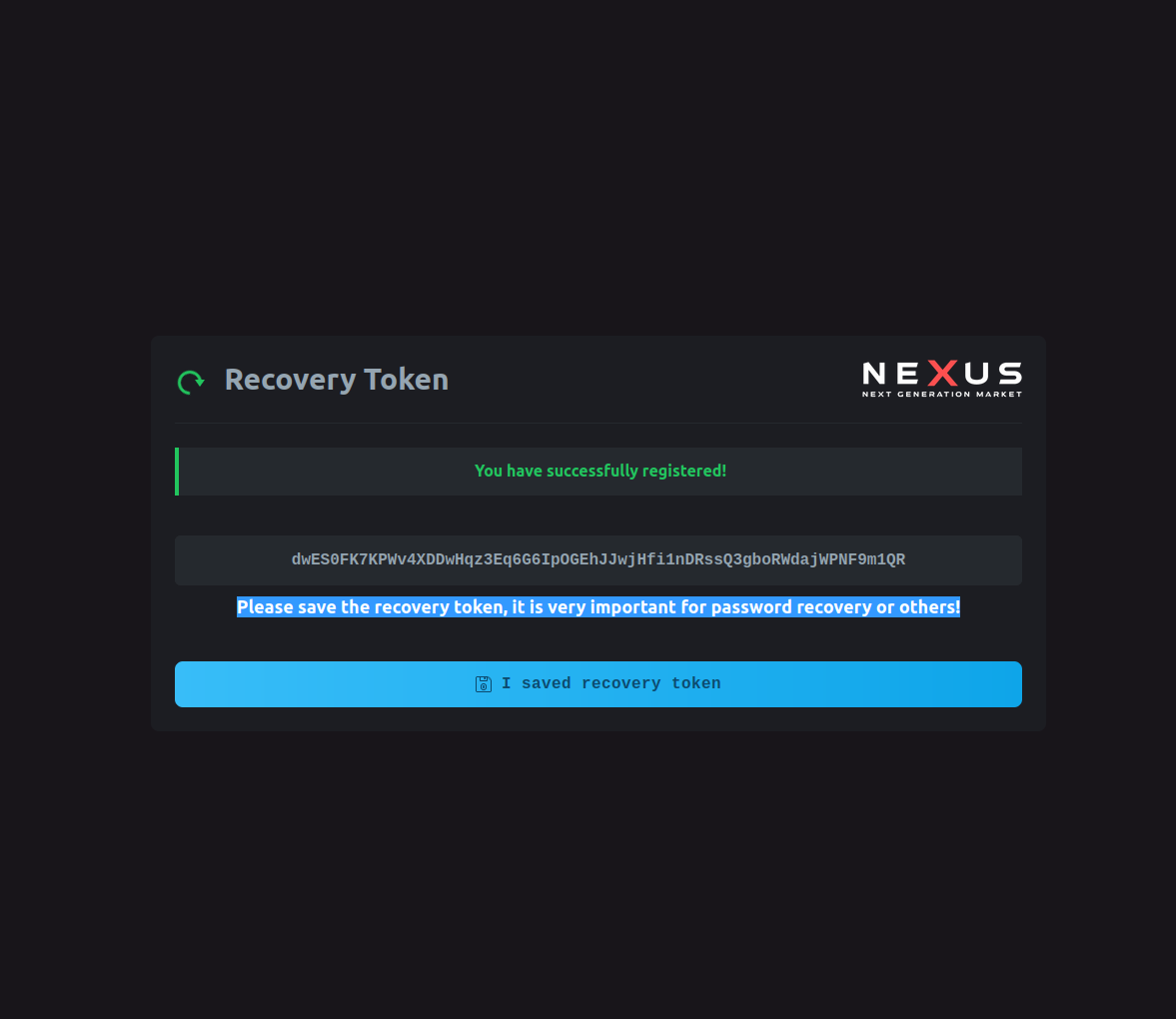
Pick a low-value listing from a vendor with 50+ completed orders. Initiate a 2-of-3 multisig transaction. Confirm the escrow address on-chain before funding. Release from escrow only after you've verified receipt — disputes are handled by Nexus staff against both buyer and vendor PGP-signed messages, which is why step four matters. Test small, then scale. Impatience is the first attack surface.
Fresh figures from the last thirty days of on-platform activity, cross-checked against public Dread status threads. No marketing rounding.
Active profiles with at least one login in the past 90 days. Up from 47,000 at the start of the year.
Vendors past the bond + probation period. Average account age 11.4 months. Background checks are real.
Live at this moment across all categories. Delisted items do not count. Snapshot refreshed hourly.
97.6% availability across all four mirrors. Every sub-60-second outage is logged on the Nexus status page.
Six concrete capabilities, documented against what we see on the platform. Not a marketing bullet list — the ones below are either verifiably present or we cut them from this page. Cross-links back to the entry guide where setup is involved.
Most Tor markets accept BTC and stop there. Nexus takes Bitcoin, Monero, and Litecoin at parity — same checkout, same multisig. Monero is the default for privacy. Bitcoin runs through a per-transaction mixing cycle. Litecoin sits as the low-fee middle path for smaller orders where XMR liquidity is thin. The choice is yours; the infrastructure does not penalize you for picking one over another.
Passwordless login available from day one. Upload your public key, decrypt the challenge, you're in. Works with GnuPG and every modern OpenPGP implementation.
Standard multisig on every listing above a tiny threshold. Platform cannot run with your funds — it would need collusion with either the buyer or vendor to release.
Vendor reputation, dispute history, and vendor AMAs live inside the Nexus UI itself. You do not have to bounce to Dread to check if a vendor has open complaints — it's one tab over from the listing. Dread still exists for cross-market signal; Nexus just removes a friction point that used to cost new buyers hours of due diligence.
Every vendor conversation is PGP-encrypted at rest. Even a full platform compromise would not expose message contents.
No JS required for any core flow. Registration, checkout, messaging — all server-rendered. You should never need to lower your security slider to use a market.
Nexus ships with fifteen hand-maintained language bundles: English, Russian, German, Spanish, French, Italian, Dutch, Portuguese, Polish, Czech, Swedish, Finnish, Turkish, Japanese, Korean. Interface strings, not listings — listings remain in whatever language the vendor writes them. The translation layer is versioned in git-style bundles; native-speaker reviewers are credited per-language in the About panel. No machine translation artifacts.
Every address below is pulled from a PGP-signed Dread announcement and re-verified on a 24-hour cycle. Copy, paste into Tor Browser. For the full methodology see verified URLs.
Loading...
Loading...
Loading...
Loading...
All four mirrors share one backend. Pick the fastest — latency varies by your Tor circuit, not by the mirror itself. If a mirror times out, try the next. If all four time out, refresh your Tor circuit (Ctrl+Shift+L) before assuming an outage.
Three clicks, zero typing. The address above is verified against Nexus's PGP key every twenty-four hours. If the address changes, this page changes. Bookmark it.